Clogged Toilet Solutions: DIY Fixes and When to Call a Plumber
Is your toilet refusing to flush right when you need it most? The water creeps higher, and your heart skips a beat. We’ve all been there. At Soracco Plumbing, we know a clogged toilet isn’t just an inconvenience—it’s a source of stress, worry, and disruption in your home.
Our team has seen it all, from minor clogs to full-blown sewer backups. If you’re reading this, you want answers—and fast. Let’s get you through the mess, step by step.
What Causes Toilet Clogs?
Most blockages are the plumbing version of a traffic jam: too much trying to squeeze through at once. Common culprits:
- Too much toilet paper
- “Flushable” wipes (they’re really not!)
- Small toys or unexpected objects (kids are creative)
- Build-up from hard water or old pipes
Sometimes, though, a clog is just the tip of an iceberg. It might point to bigger issues lurking deeper in your plumbing.
Quick DIY Fixes 🚽
Before panic sets in, try these fast fixes. Sometimes, the simplest tools can save the day.
Grab the Plunger
- Choose a flange plunger (the one with the extra rubber lip).
- Place it over the drain hole and press down gently—you want a good seal.
- Push and pull with steady, strong pumps (10–15 times).
- If water starts to drain, you’re winning.
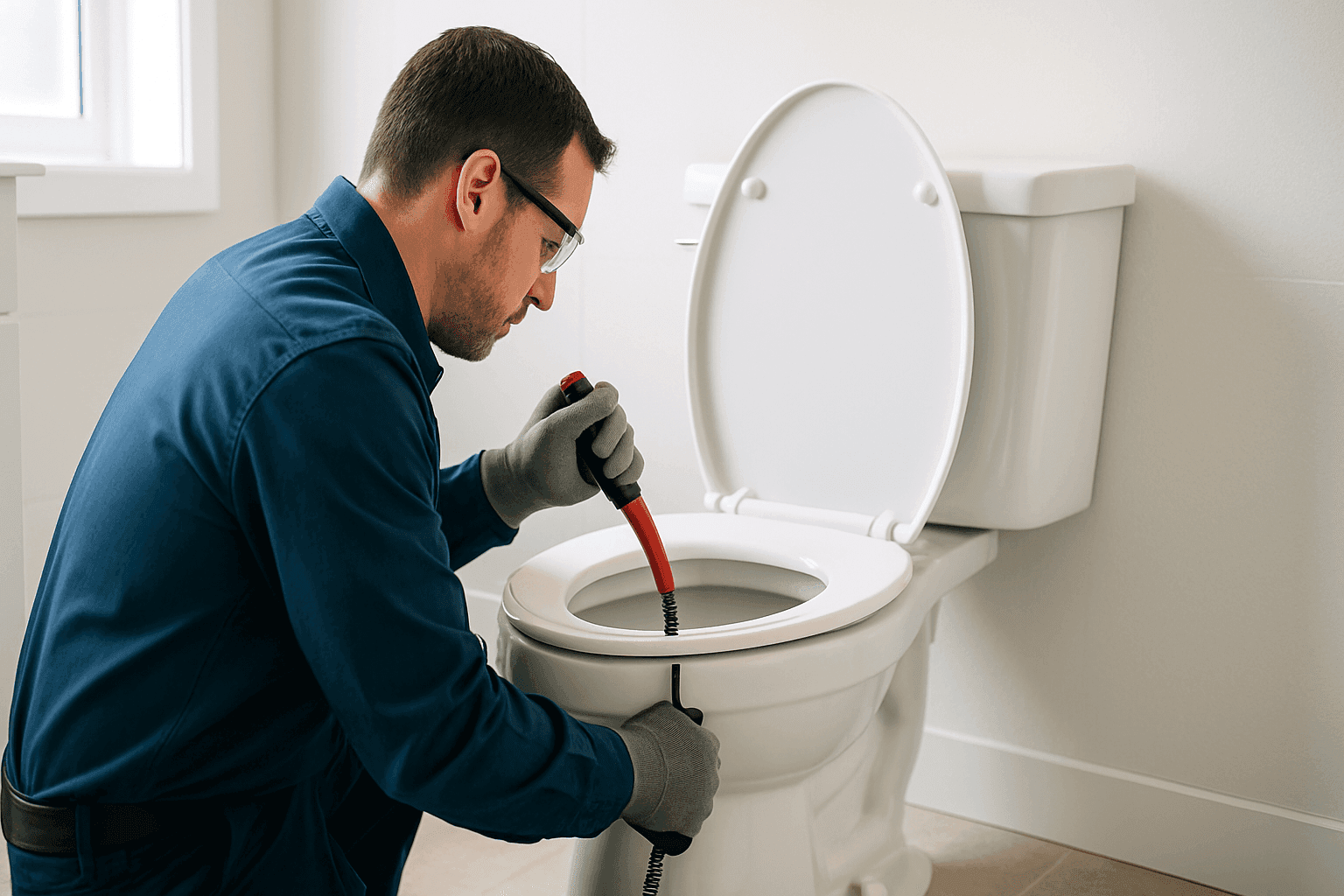
Use a Toilet Auger
- Feed the flexible end into the toilet bowl.
- Crank the handle slowly. If you feel resistance, keep turning.
- Pull out debris and flush—carefully.
Safe Chemical Options
- Avoid harsh drain cleaners (they can damage pipes and harm the environment).
- Try a mix of baking soda and vinegar: pour 1 cup of baking soda, then 2 cups of vinegar. Let fizz for 15 minutes, then flush with hot (not boiling) water.
- Never mix chemicals—this can cause dangerous fumes.
Tools You Need (and When to Use Them)
- Plunger: First line of defense for most clogs.
- Toilet Auger: For stubborn blockages deeper in the drain.
- Rubber Gloves: Trust us, you’ll want them.
- Bucket & Towels: To catch any overflow or spills.
You don’t need a toolbox worthy of a home improvement show. These basics cover most situations.
Avoiding Overflow: Act Fast
When water starts rising, time is your enemy. Here’s what to do:
- Remove the tank lid and push the flapper down. This stops more water from entering the bowl.
- Don’t flush again until the clog is cleared. Repeated flushing can flood your bathroom.
- Use towels or a mop to catch spills before they spread.
- If you suspect a serious backup, turn off the water supply valve (usually behind the toilet near the floor).
Signs It’s More Than a Clog 🚨
Some problems run deeper than a simple blockage. Watch for:
- Water bubbling up in sinks or tubs when you flush (could mean a main sewer line issue)
- Multiple drains running slow at once
- Frequent or recurring clogs, even after plunging
- Bad smells coming from drains
- Water backing up into the bathtub or shower
These are red flags. They can point to broken pipes, root intrusion, or a bigger sewer line problem—especially in older homes. The Uniform Plumbing Code and local building codes require that main sewer lines remain clear and intact for safety and sanitation.
Should You DIY or Call a Plumber?
If your plunger and auger aren’t solving it, don’t feel defeated. Some clogs are beyond reach without special equipment. Here’s when it’s wise to call Soracco Plumbing’s emergency plumbing team:
- You’ve tried the basics and nothing works
- You see water leaking around the base of the toilet
- Multiple drains are affected at once
- You smell sewage or suspect a gas leak (shut off your gas and call for help—see “Gas Line Installation near you” for emergencies)
When pipes fight back, you need pros who can get things moving—safely and cleanly.
What Pros Do On Arrival
Our licensed team arrives with more than just a plunger. Here’s what happens:
- We inspect your toilet and surrounding plumbing for signs of damage or hidden leaks.
- Specialized tools, like professional augers and high-pressure water jets, clear out tough blockages.
- If we suspect a deeper issue, we use video inspection cameras to check your sewer line.
- All work is tidy. We treat your home like our own.
We also check for any code violations and can advise on next steps if you need repairs, repiping, or even sewer line installation.
Prevention & Maintenance Tips
A few simple habits can prevent most toilet disasters:
- Only flush toilet paper—nothing else.
- Keep small objects and wipes out of reach of children.
- Schedule regular drain cleaning, especially in older homes.
- Install a water filtration system to reduce mineral buildup if you have hard water.
- Watch for signs of slow drains or gurgling sounds.
Annual inspections and preventative maintenance with a qualified plumber keep surprises to a minimum.
Costs & Time Factors
DIY fixes are usually fast—15 minutes to an hour. But stubborn or hidden clogs may take longer.
- Professional drain cleaning and toilet repair typically take 1–2 hours for most households.
- Deeper sewer line repairs or video inspections may take half a day or more.
- Costs depend on the nature of the clog, the tools needed, and whether repair or replacement is required.
Remember, fast action can help avoid bigger bills down the line.
When It’s an Emergency
A clog that causes overflow, sewage backup, or flooding is an emergency. So is any situation where:
- Water won’t stop flowing, even after you shut off the supply
- There’s a risk of water damage to floors or walls
- You spot a gas smell or hear hissing near pipes (call for gas safety checks immediately)
Soracco Plumbing offers true emergency plumbing services—day or night. We’re ready when you need us most.
FAQ: Common Questions
What if plunging doesn’t work?
Try a toilet auger next. If that fails, call a licensed plumber. Some clogs are too deep or tough for household tools.
Are chemical drain cleaners safe?
Most are not recommended. They can corrode pipes and harm the environment. Stick to mechanical methods or natural solutions like baking soda and vinegar.
Can a clogged toilet affect other drains?
Yes. If you notice slow drains elsewhere, it may be a main line issue—definitely time to call in a pro.
How often should I get preventive maintenance?
Most homes benefit from annual inspections, especially if you have older pipes or frequent clogs.
Local & Seasonal Considerations 🏡
In colder months, pipes can contract and make existing clogs worse. Heavy rains can seep into sewer lines, causing backups. Living in an older home in the area? Tree roots may invade pipes, leading to stubborn, recurring clogs.
Soracco Plumbing is prepared for every season and knows the quirks of local plumbing systems. From leak detection to preventative maintenance, we’re only ever a call away.
Call Soracco Plumbing now — or reach us anytime at 877-362-3197 .